In a nutshell
What?
The aim of the project is to find out how mountain hay meadows, which are highly valuable for people and nature, can be preserved and, in particular, how the trend towards abandonment and the associated deterioration of the areas can be counteracted. The aim is to learn from mountain hay meadows that are in a very good conservation status (so-called “best practice” areas) what is decisive for their good condition and which approaches (e.g. management practices, forms of organization, policy instruments) can contribute to their strengthening.
Why?
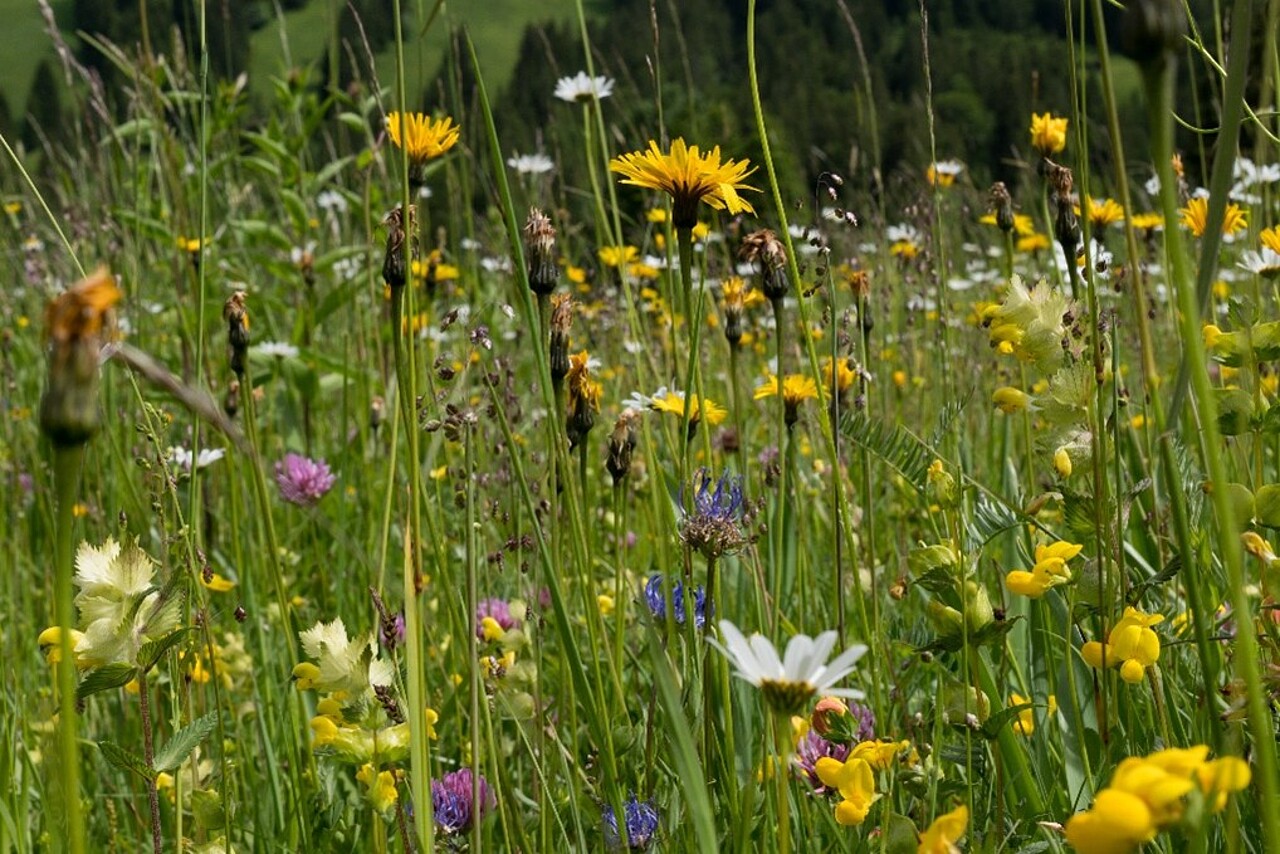
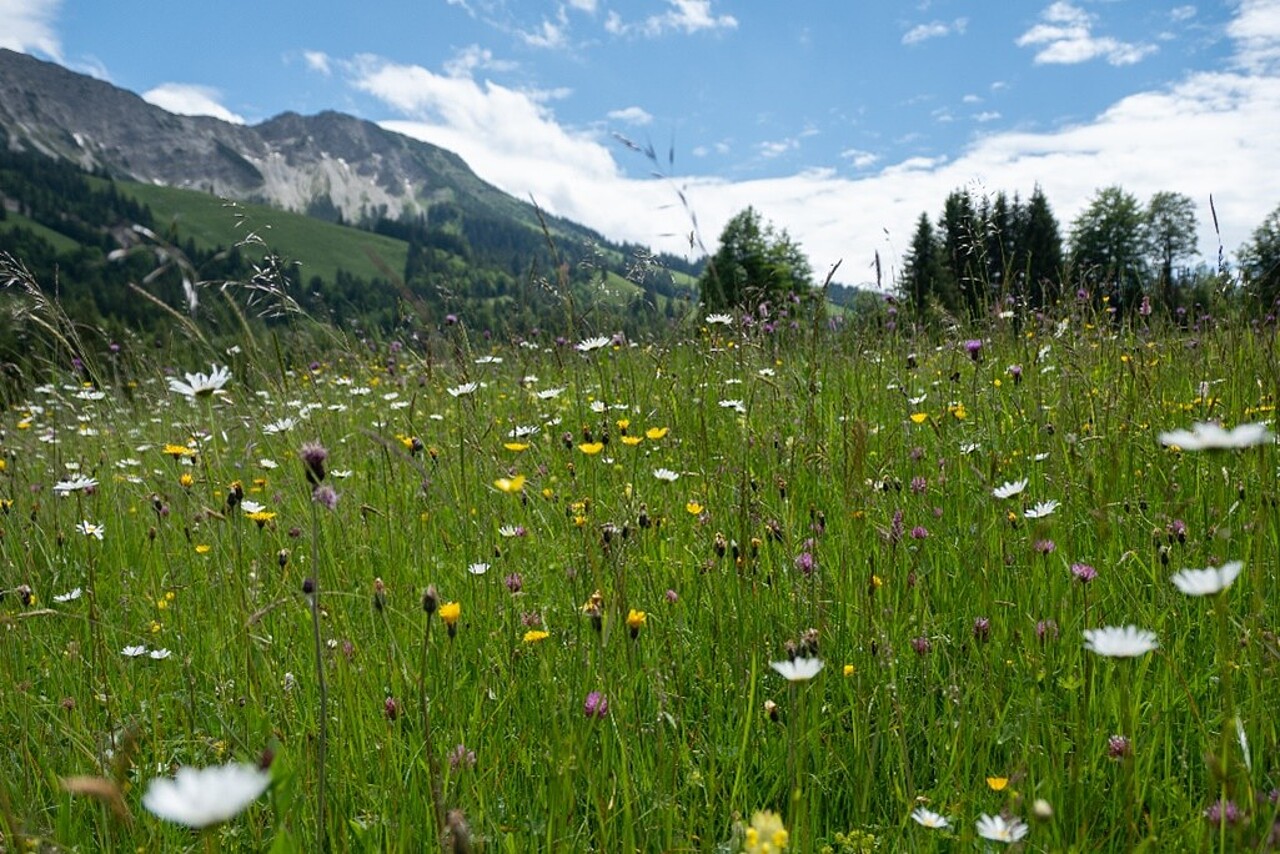
Mountain hay meadows constitute a habitat type protected under the EU Habitats Directive (Natura 2000 code 6520) and host a wide array of endangered plant and animal species. Moreover, they are an important part of the cultural landscape and closely intertwined with heritage and place-based values for local people and visitors. Under current socio-economic conditions, however, the favorable conservation status of these meadows is often threatened by farmland abandonment or reduced human activities (“underuse”). The shortcoming of many policies addressing these threats might rest with the fact that compared to established governance practices mainly focusing on overexploitation, underuse is poorly addressed. An ongoing negative qualitative and quantitative conservation trend for mountain hay meadows and a current formal infringement procedure at EU-level alleging Germany of insufficient conservation action on behalf of such meadows indicate the socio-political urgency to maintain the remaining meadows with existing favorable conservation status and also to learn from best management practices implemented there.
How?
In a transnational meta-analysis in Germany, Austria, Sweden and Armenia, an interdisciplinary research team in close collaboration with local stakeholders will comparatively
- identify, based on established knowledge in case studies, current best practices related to the maintenance of a favorable conservation status of mountain hay meadows,
- identify innovative management tools and governance approaches that are suitable for the management of such meadows,
- explain the significance of different ownership regimes and the significance of whether the areas are located in or outside formally protected areas,
- describe the condition linked to the use of these meadows through remote sensing and outline the main actual and potential spatial effects of underuse of mountain hay meadows using geographical information systems, and
- develop scenarios for the management of mountain hay meadows in 2030 and 2050 through playful approaches with different stakeholders.